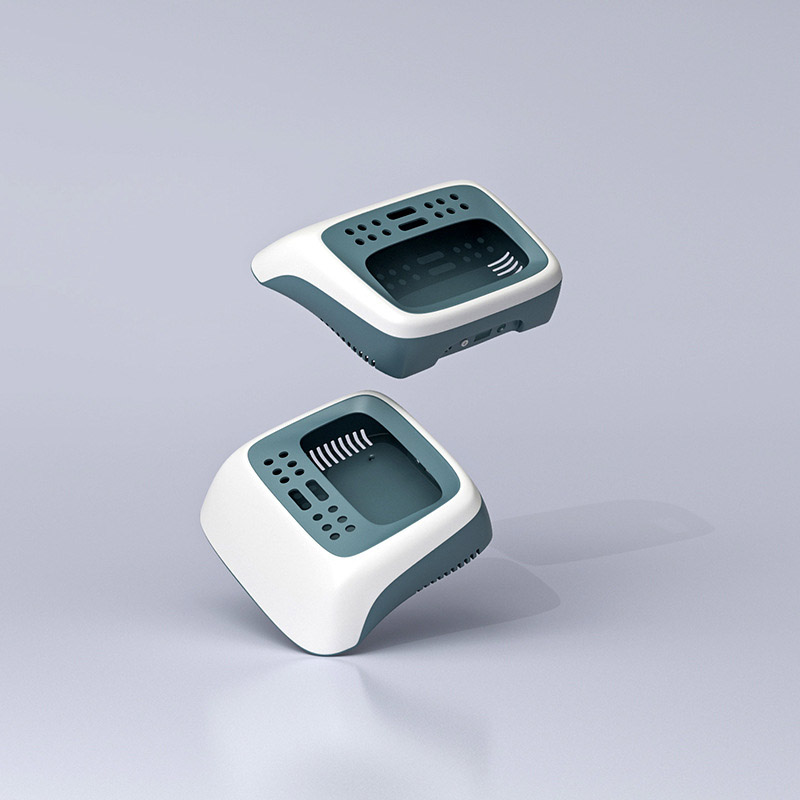
What Is a Meditation Player?
A meditation player is a dedicated audio hardware device built around meditation and mindfulness experiences. Unlike phones or general music players, it focuses on a single purpose with minimal interaction and a low-distraction design.
What Is a Meditation Player Used For?
Meditation players are used for meditation and relaxation, mindfulness practice, stress reduction, emotional regulation, and sleep preparation. By providing a focused environment and guided audio, they help users recover mentally and physically across different scenarios.
User Experience Reviews of Meditation Players
Comparison table (summarized from aggregated e-commerce platform reviews):
| Dimension | Positive (Pros) | Negative (Pain Points) | Improvement Suggestions |
|---|---|---|---|
| Appearance & Hardware | Compact and portable; premium metal feel | Outdated port (Micro-USB); device heating | Switch to USB Type-C; improve heat dissipation |
| Sound Quality & Effects | Clear voice; realistic ambient sounds | Electrical noise; harsh treble | Reduce noise floor; enhance immersive low frequencies |
| Feature Experience | No phone distractions; gradual fade-out shutdown | Fixed content; timer function glitches | Support custom uploads; fix bugs |
| Battery & Endurance | More power-efficient than phones; long standby | Overstated battery life; fast battery aging | State battery life honestly; optimize power consumption |
| Operation Logic | Physical buttons; supports blind operation | Overcomplicated menus; inaccurate volume steps | Simplify menu layers; refine volume granularity |
| Quality & After-Sales | Durable and drop-resistant | Inconsistent QC; difficult warranty claims | Strengthen outgoing inspection; improve warranty policy |
What to Consider Before Design & Development
01. Shape Adaptation by Micro-Scenario
Across different environments, the product form should achieve visual harmony through either mimicry (borrowing familiar archetypes) or integration (blending into the surroundings).
| Scenario Category | Design Keywords | Concrete Form Suggestions |
|---|---|---|
| Home / Bedroom | Art object; decorative | Low-profile silhouette; matte surface. Looks like a ceramic ornament or speaker during the day, and becomes a meditation assistant at night—blending into home décor. |
| Buddhist / Zen Practice | Ritual; Zen aesthetics | Inspired by a wooden fish, singing bowl, incense burner, prayer wheel, or a minimalist lotus. Use warm, rounded materials like wood and ceramic to create a sacred, ritual-like space. |
| Museum / Exhibition Hall | Cultural symbol; “invisible device” | Incorporate regional elements (e.g., jade cong motifs, lattice window patterns). Shape it like an exhibit plinth or a book so the user “sees the object, not the device.” |
| Garden / Botanical Park | Bionic; landscape-like | Mimic mushrooms, deadwood, or leaves; install flush/embedded into grass. Use UV-resistant and water-resistant materials with a natural texture. |
| Urban Park | Durable; integrated with public furniture | Stone-like form integrated into green areas, or combined with benches/signage. Consider adding a solar charging panel for outdoor usability. |
02. Interaction Design Standards for Meditation Players
- Ultra-minimal operation logicGuideline: Default screen/interaction shows only “Play/Pause,” hiding all non-essential settings.Goal: Remove operational anxiety and achieve “power on = play.”
- Non-shocking state transitionsGuideline: No abrupt changes in sound/light. Power on/off and pause must fade in/out over 3–5 seconds.Goal: Protect the senses and prevent sudden sounds from breaking the meditative state.
- Blurred time perception feedbackGuideline: No numeric countdown timers. Use glow pulsing, warm/cool color shifts, or a “breath guide bar” to indicate progress.Goal: Reduce time pressure and guide attention toward breathing rather than numbers.
- Blind operation with multi-sensory confirmationGuideline: Maximize the core button area. Provide tactile confirmation via gentle vibration or soft confirmation tones.Goal: Ensure accurate control even with eyes closed.
- Anti-accidental-touch protectionGuideline: Auto-lock after playback starts; unlock via long-press or a specific gesture.Goal: Prevent interruptions caused by posture changes or accidental touches.
03. Expandability Design Standards
| Dimension | Practical Design Direction |
|---|---|
| 1. Content Expansion | Support microSD (TF) playback: reserve a standard card slot so users can import lossless audio, guided scripts, or private/custom content. |
| 2. Audio Expansion | Bluetooth speaker mode: one-tap switching so it can connect to a phone for app courses, podcasts, or third-party streaming audio. |
| 3. Power Expansion | Battery + plug-in dual mode: built-in lithium battery for outdoor/mobile use; USB Type-C continuous power for long-term home use. |
| 4. Preset Expansion | Offline storage: built-in memory to preload multiple common meditation programs, enabling instant use even without a card or phone. |
Existing Meditation Player Style References on the Market

Pebble-Shaped Aroma Burner
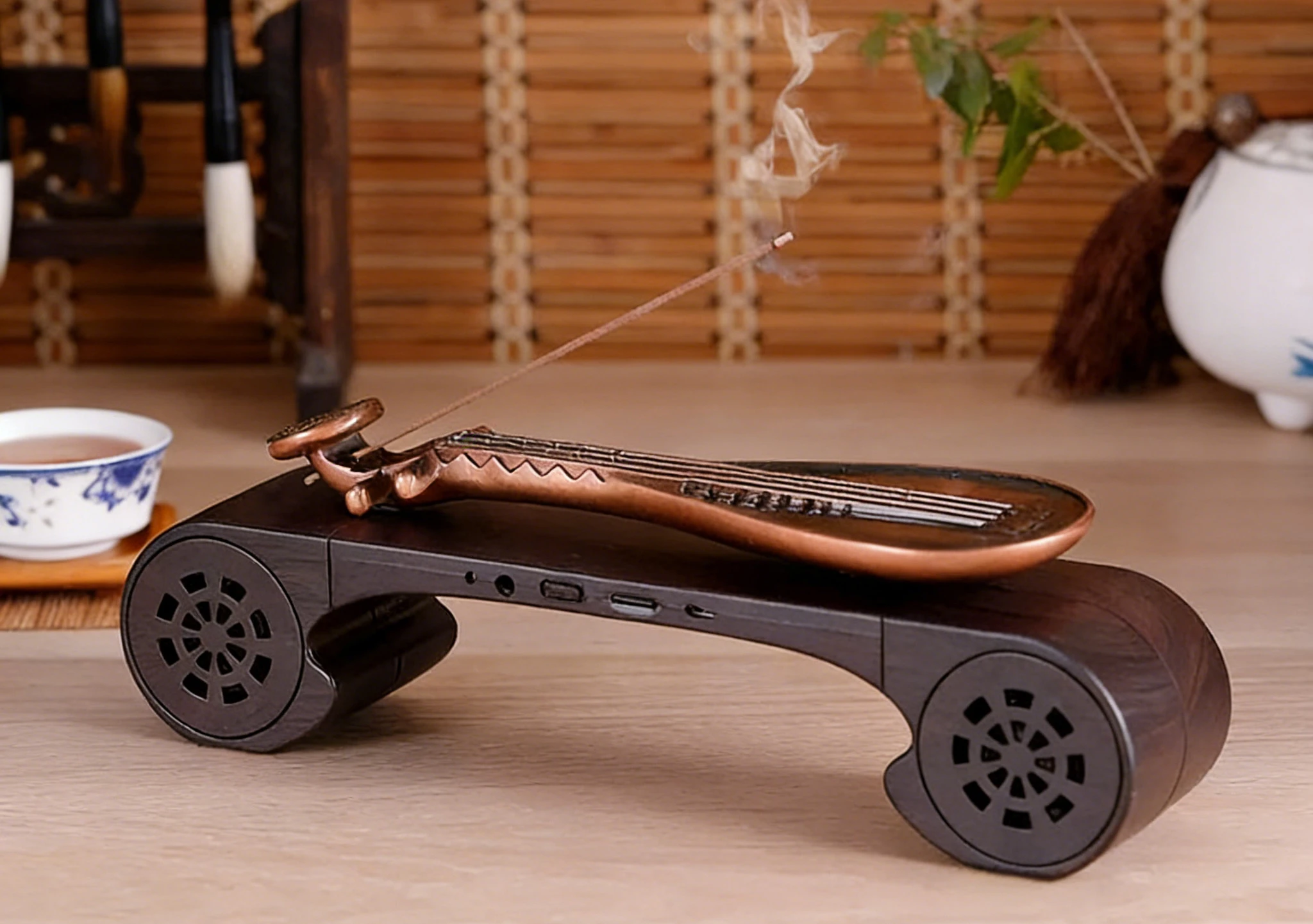
Vintage Tabletop Incense Burner with Guqin-Inspired Design
Wearable Wooden Fish–Shaped Aroma Diffuser
Color-Changing Lotus-Shaped Aroma Lamp
Classical Music Player–Inspired Incense Burner
Wood-Grain Gourd-Shaped Aroma Burner
Modern Vintage-Style Aroma Burner
Outdoor Solar Lotus-Shaped Garden Light
Card-Insert Aroma Diffuser for Bedroom
Leaf-Shaped Incense Holder
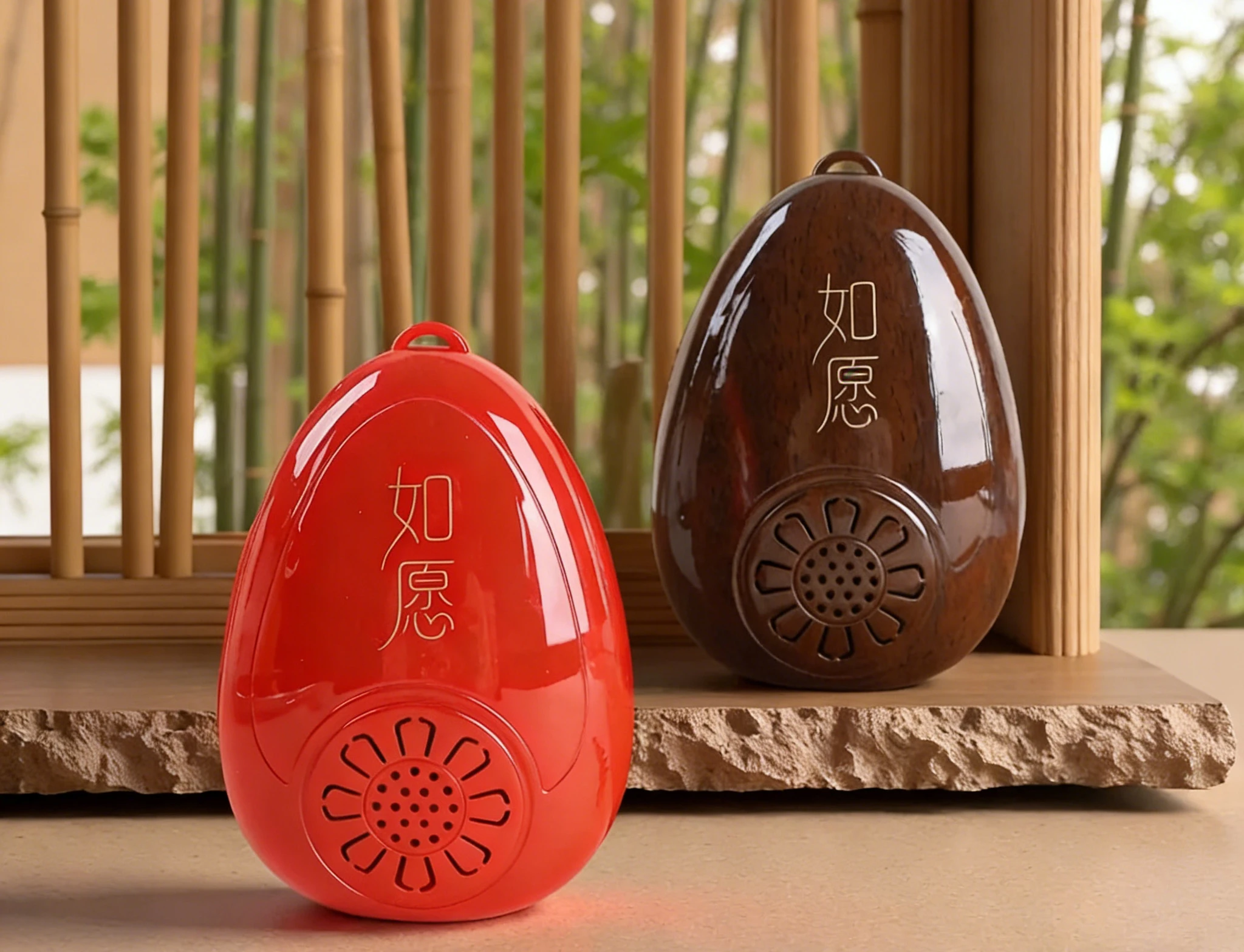
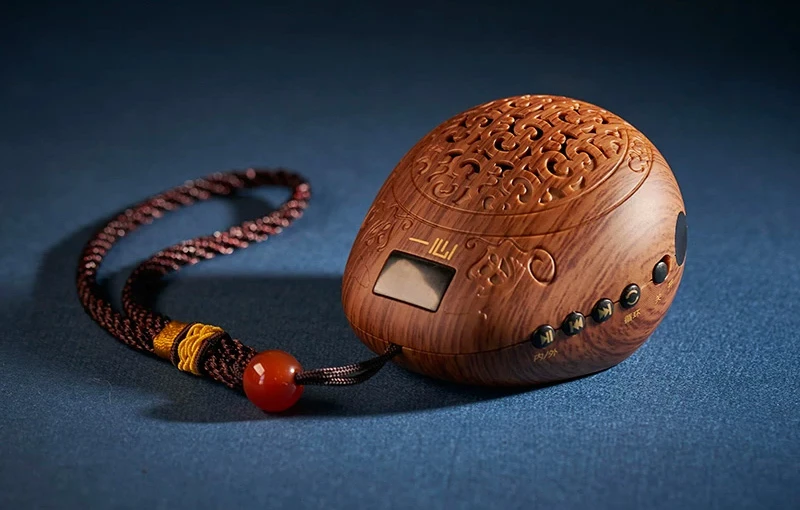
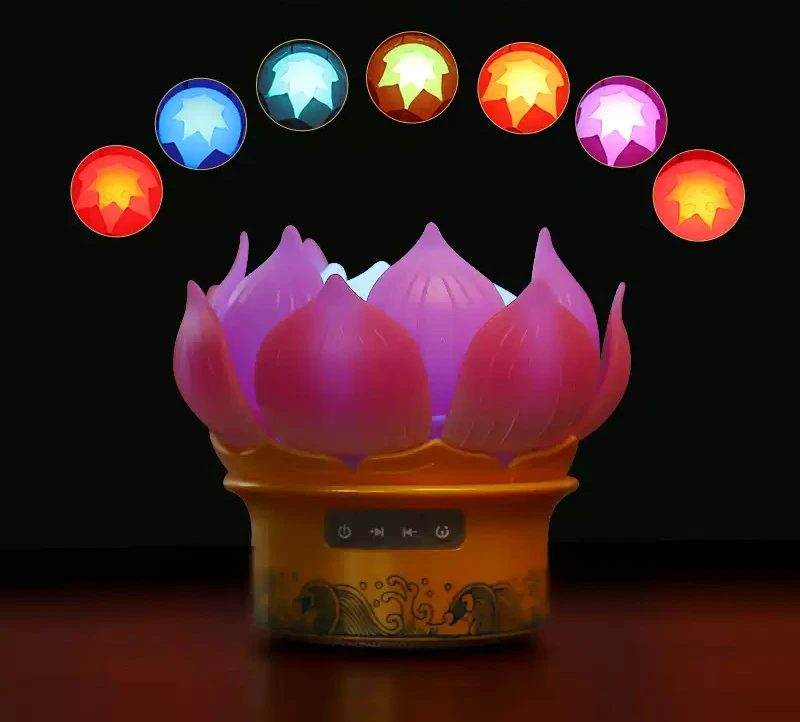
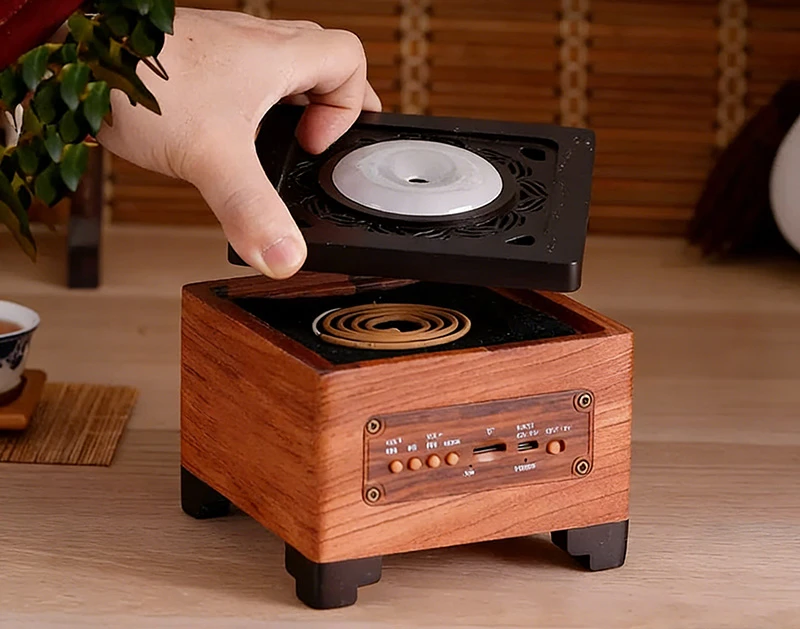
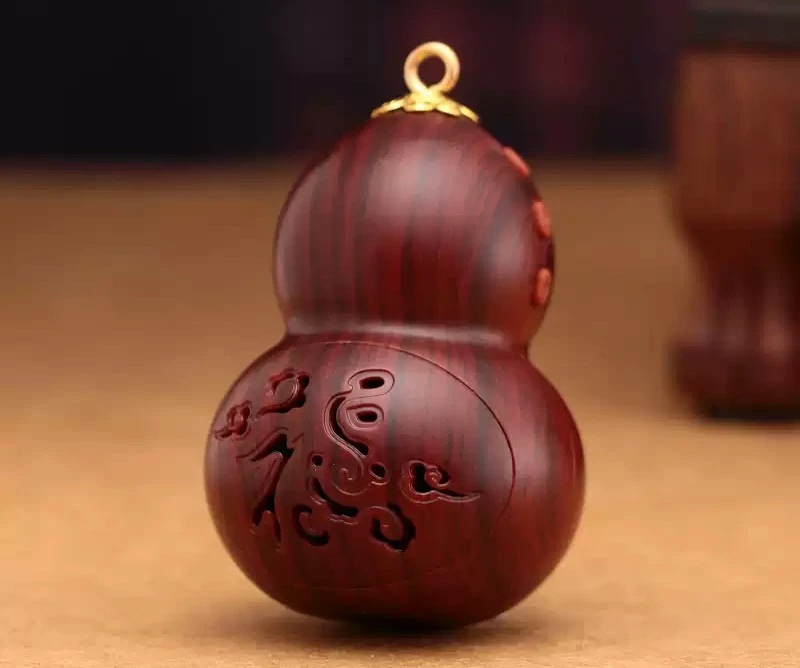
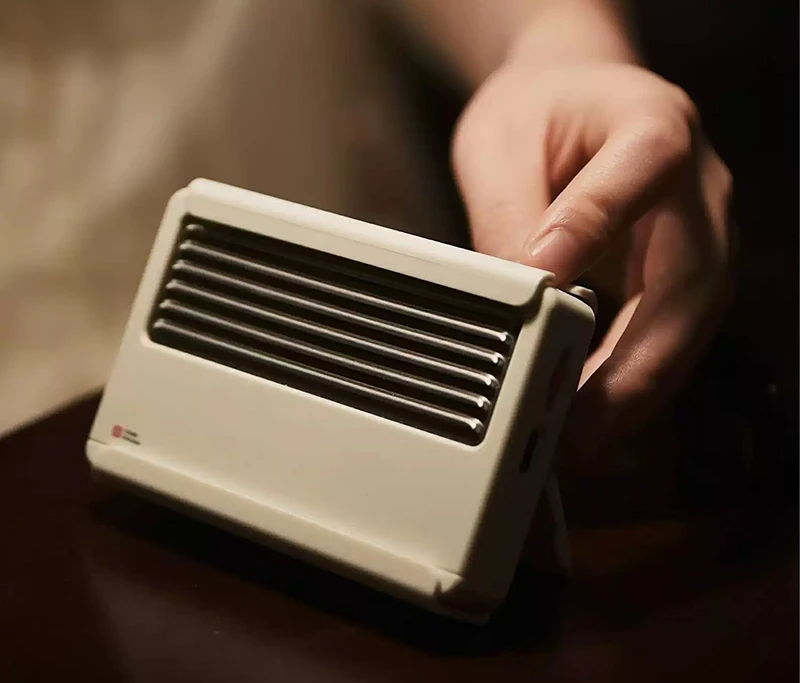
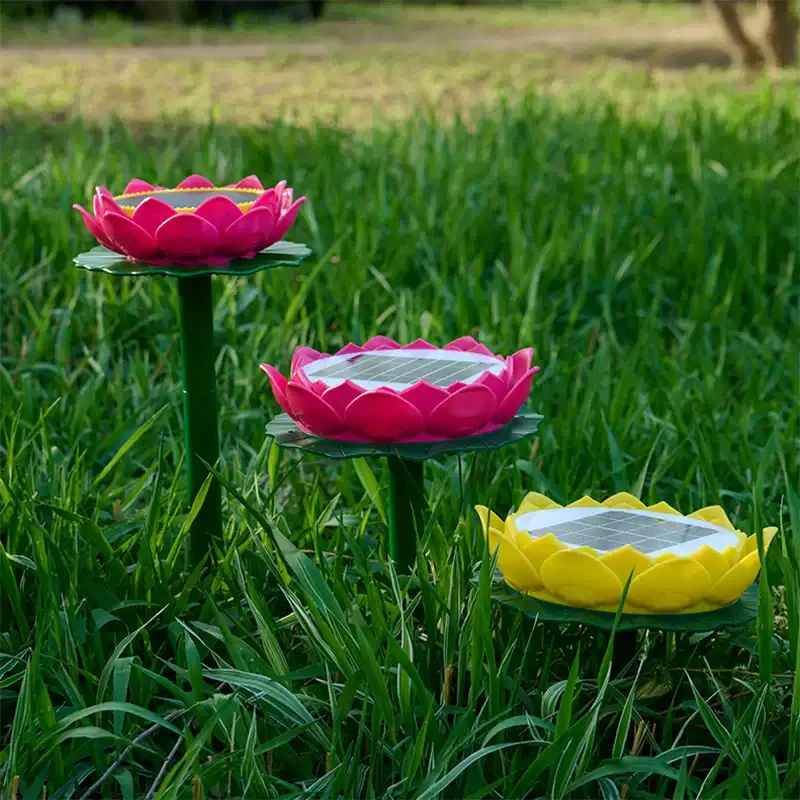
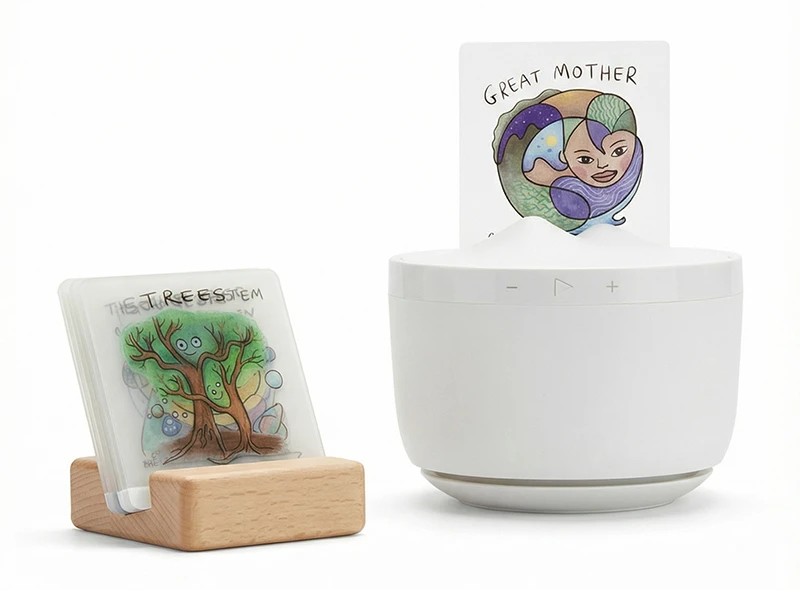
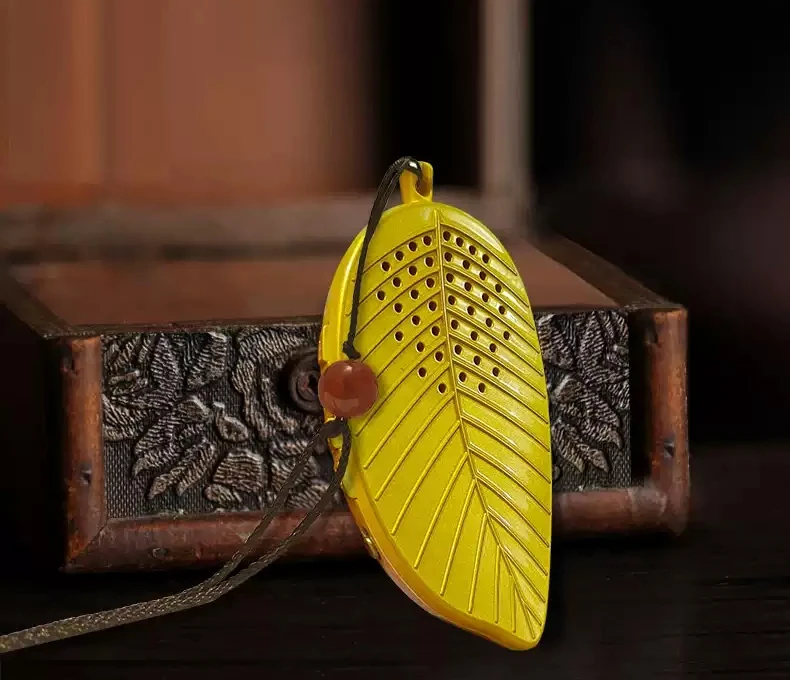

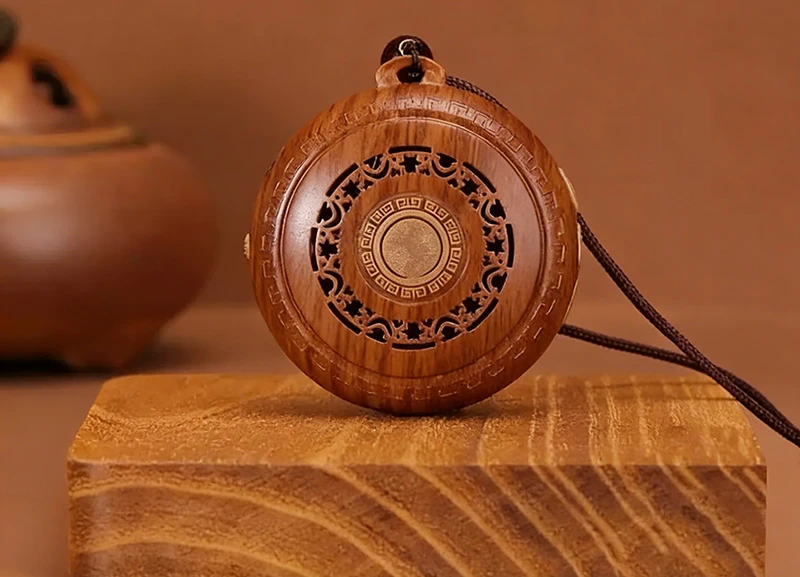
Round Wearable Neck-Hanging Aroma Diffuser
Common Questions About Meditation Players
What’s the difference between a meditation player and a mobile meditation app?
A meditation player is a standalone device designed specifically for meditation, with no message notifications or complex UI, making it easier to stay focused. A phone app is more likely to be interrupted by notifications and information flow, which can disrupt the meditation experience.
What is the process for customizing the exterior design of a meditation player?
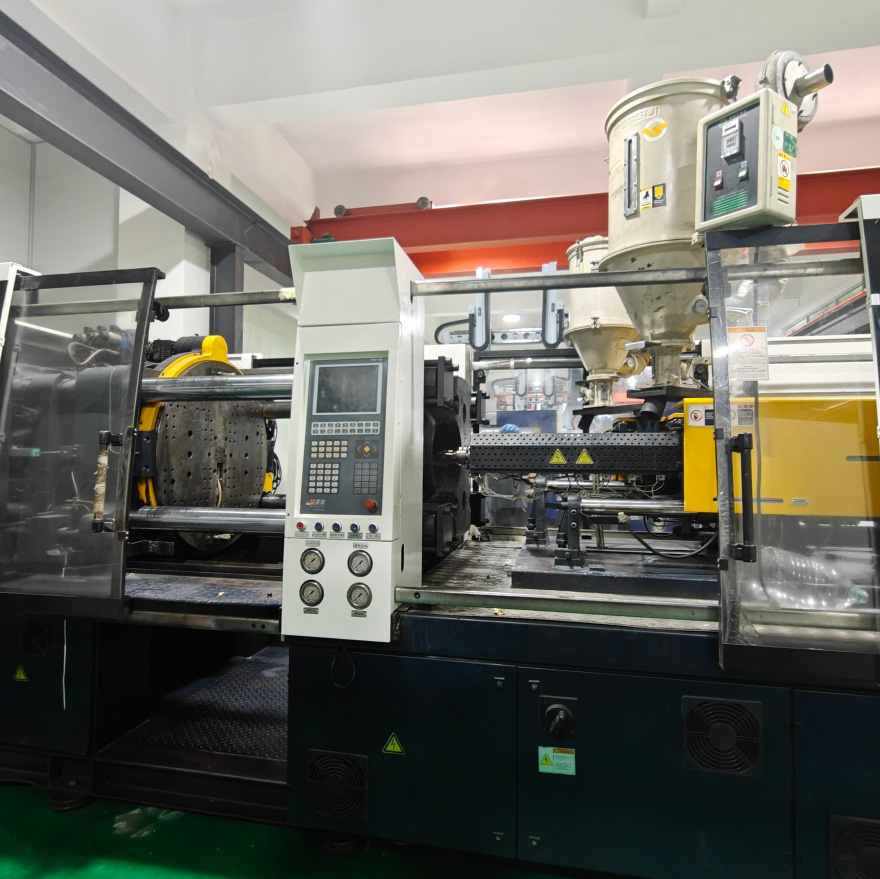
Before customization, WorldBound Group will confirm whether the customer already has an exterior design, 3D files, or prototype samples. If a solution is available, we can quote directly. If not, WorldBound Group can provide concept, industrial, 3D modeling, and prototyping services. Fees are charged by phase. After sample approval, the project moves to mass production. Certification, manufacturing, and shipping costs are calculated separately.
What MOQ is usually considered cost-effective for customizing a meditation player with my own brand appearance?
If plastic injection molding and tooling are involved, an MOQ of about 5,000–8,000 units typically becomes more cost-effective. To truly reduce tooling costs, it’s recommended to plan for an annual volume of 8,000–15,000 units. This range helps reduce per-unit costs while avoiding excessive inventory and cash flow pressure.