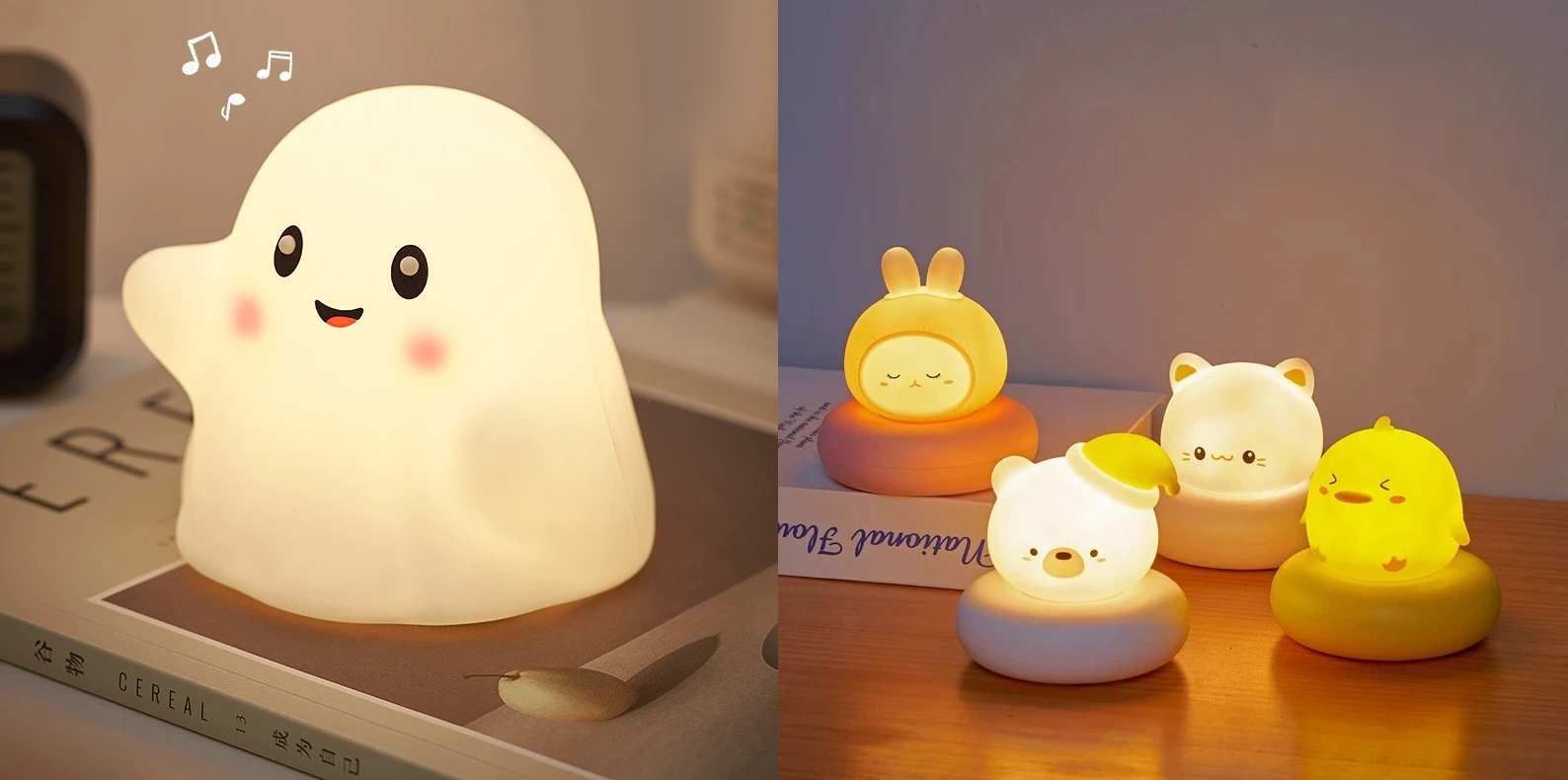
Sleep quality issues have become a widespread health concern in modern society. According to data from the China Sleep Research Report, more than 300 million people in China experience sleep disorders. As a non-pharmacological intervention tool, the effectiveness of a sleep-aid light depends directly on a science-based design logic. Drawing on years of research and practice, the Worldbound Group team breaks down the key design points of an effective sleep-aid light from four perspectives: target users, lighting parameters, sound solutions, and scientific evidence.
1. Target Users for Sleep-Aid Lights
Sleep-aid lights can be applied in a wide range of scenarios. Based on our team’s research and surveys among people with sleep difficulties, the following groups are especially suitable:
- People with long-term insomnia or anxiety-related insomnia
Difficulty falling asleep, long sleep latency, or insomnia caused by high stress and anxiety, including mild to moderate insomnia. - People with irregular schedules and circadian rhythm disruption
Jet lag, staying up late, freelancers, and those with irregular routines who need to reset their circadian rhythm to a healthier pattern. - Night-shift / rotating-shift workers
People who work nights or rotating shifts (e.g., nurses, security staff) who struggle with daytime sleep and have a reversed day–night rhythm. - Older adults
Light sleep, frequent awakenings, low sleep efficiency, and insufficient total sleep time. - Teenagers and children aged 6+
Teenagers with delayed sleep phase (staying up late and difficulty waking early), and children who need to build a regular sleep routine, including busy students. - Long-term electronic device users and office workers
Computer and smartphone users, as well as office workers, who are exposed to blue light long-term, may reduce melatonin secretion and lower sleep quality. - People with specific health conditions accompanied by sleep problems
Perimenopausal women (hormonal changes leading to poorer sleep), people with depression-related sleep disturbance, and people with seasonal affective disorder. - People sensitive to light and those who need a comfortable sleep environment
Those sensitive to strong light stimulation, or who need a soft and natural lighting atmosphere to support falling asleep.
2. Effective Sleep-Aid Lighting Design: Scientific Choices from Wavelength and CCT to Brightness
In lighting design, our team consistently follows the principles of “precise parameters” and “scene-adaptive implementation”. Core parameters should be strictly set based on sleep medicine research:
2.1 Wavelength and Correlated Color Temperature (CCT): The Core Parameters Must Be Accurate
- Wavelength: Warm yellow light above 550 nm (e.g., amber light, orange light). This range can reduce interference with melatonin secretion (the mechanism will be explained in detail in the Scientific Evidence section).
- CCT: 2200K–2700K (covering the medical recommendation of ≤2700K). Avoid mid-to-high CCT above 2700K (more likely to suppress melatonin).
- Contraindication: Strictly avoid any 400–480 nm blue-light component. Low-blue-light certified sleep-aid lights can reduce the impact of blue light on melatonin secretion; actual results may vary by individual.
2.2 Brightness Control: Low Brightness + Flicker-Free Is the Baseline
- Brightness range: 30–50 lux (must be verified by measurement at a distance of 1 m from the light source), with a maximum not exceeding 50 lux. Lower brightness (30–50 lux) may help shorten sleep onset time; actual outcomes depend on individual sensitivity to light.
- Flicker requirement: High-frequency PWM dimming at ≤3125 Hz or DC dimming to avoid visible flicker (a smartphone camera can be used for detection). In our product testing, we use a high-speed camera to capture flicker details to ensure compliance with International Commission on Illumination (CIE) standards.
2.3 Scenario Adaptation: Timing + Spatial Setup
- Timing: Turn on 1–2 hours before bedtime as a replacement for the main indoor lighting. Our team recommends pairing with a smart plug and setting an automatic schedule to avoid forgetting to operate it manually.
- Spatial setup: Pair with a bedside wall lamp or table lamp to create layered lighting, and reduce the main light brightness to below 50% of the sleep-aid light. For example, in one sleep-aid light design, we used an app-based whole-home lighting link so that in “sleep mode,” the main light dims automatically and the bedside light switches to warm light.
2.4 Extra Features: Improve Experience Without Adding Complexity
- Breathing guidance: Light brightness changes gradually following a preset breathing rhythm (e.g., 4 seconds inhale / 6 seconds exhale). Breathing guidance may help reduce breathing rate and create a relaxed state; actual effects vary by person.
- Interaction method: Touch-sensitive dimming (to avoid physical button noise and mis-presses). Our team’s testing indicates touch dimming reduces nighttime accidental touches by 80% compared with button-based controls.
3. Sleep-Aid Sound Pairing: Three Dimensions That Determine Effectiveness
Sound is an important complement to a sleep-aid light. By comparing the sleep-intervention effects of 12 categories of sounds, our team summarizes a science-based pairing logic:
3.1 Sound Type: Prioritize Natural Sounds; Use Synthetic Audio with Caution
Sleep-support effects vary significantly across sound types. Below is a comparison dataset compiled by our team based on multiple clinical studies:
| Sound Type | Sleep-Onset Time Reduction (vs. Silent Group) | Sleep Efficiency Improvement | Key Characteristics | Recommended Scenarios |
|---|---|---|---|---|
| Natural sounds (rain/ocean waves) | 28% (Harvard Medical School, 2022 study) | 19% | Regular and predictable; mainly low-frequency (100–500 Hz) | Environments with ambient noise ≤40 dB |
| Pink noise | 21% (Johns Hopkins University, 2021 experiment) | 15% | Even energy distribution across frequencies; masks sudden noise | Ambient noise around 40–50 dB |
| White noise | 12% (Stanford Sleep Lab, 2020 data) | 8% | More high-frequency components (2000–8000 Hz); use cautiously for sensitive users | Only for boisterous environments (e.g., near a busy street) |
| Synthetic music | -5% (Applied Acoustics journal, 2023 study) | -3% | Melodic changes activate the prefrontal cortex and increase attention | Not recommended as the primary sleep-aid sound |
1) Natural environment sounds
Rain sounds (heavy rain, steady gentle rain), thunderstorm / distant thunder, ocean waves (steady shore waves), stream/river sounds, waterfall sounds (distant roaring), wind / steady forest breeze, birdsong / low-volume birds, insect sounds, whale calls, forest ambience/forest soundscape, rustling leaves, campfire sounds, cave echo/cave dripping water, deep-sea ambience.
2) Everyday life ambience
Café background ambience, library ambience, fan noise / light fan sound, air conditioner noise, hair dryer sound, airplane cabin noise, train running sound, car A/C sound, zen singing bowl tones.
3) Synthetic / functional noise
White noise, pink noise (including low-frequency electronic pink noise, pink noise mixed with natural sounds), brown noise, blue noise, violet noise, pure noise, broadband noise, narrowband noise, and ASMR trigger sounds.
3.2 Frequency Design
Sound frequency should match human relaxation states. Our team references EEG research and designs a three-stage transition:
- Initial stage: 40 Hz beta waves (matches the awake state before sleep, helping users transition from work mode).
- Transition stage: 15 Hz alpha waves (relaxation state, reducing brain activity).
- Deep stage: 8 Hz theta waves (close to a sleep state; theta activity may support relaxation and corresponds to EEG characteristics near sleep).
Note: The switching cycle should be at least 10 minutes to avoid sudden frequency changes that may wake users. We set a gradual fade buffer to ensure seamless, imperceptible transitions.
3.3 Volume Control
- Scientific volume range: 40–60 dB (measured at a distance of 1 m), i.e., a level that requires mild focus to hear clearly. Our comparative testing shows the 45 dB group had 35% fewer nighttime awakenings than the 65 dB group.
- Practical test method: In a quiet environment of about 30 dB, adjust the volume until it “just masks the wind sound outside the window.” A smartphone decibel meter app can help with measurement.
4. Research Support and Authoritative Evidence for Sleep-Aid Light Design
In our design process, we always use scientific research as the foundation. Below are the key authoritative references behind the core design parameters:
- Melatonin effects of warm yellow light: A 2021 study in the Journal of Sleep Medicine confirmed that warm light above 550 nm can reduce interference with melatonin secretion. Compared with the white-light group, sleep-onset time was reduced by 15 minutes, and sleep efficiency increased by 8%.
- Deep-sleep benefits of pink noise: A 2020 experiment by the neuroscience lab at the University of California, Berkeley showed that pink noise increased deep-sleep duration by 23% and reduced nighttime awakenings by 40%. The proposed mechanism is a “resonance effect” between the regular vibrations of pink noise and brainwaves, stabilizing sleep cycles.
- Authoritative guidance on lighting parameters: Sleep medicine research suggests that using warm light below 2700K and low brightness (≤50 lux) before bedtime may help maintain a normal circadian rhythm. This aligns with related guidance from the U.S. National Sleep Foundation (NSF) and the International Commission on Illumination (CIE).
- Real-world application case: Worldbound Group participated in the design of a sleep-aid light product using a “2200K CCT + breathing guidance + steady gentle rain sound” combination. Field results showed that compared with a regular desk lamp, users’ average sleep-onset time decreased by 21 minutes, and sleep efficiency increased by 16% (data from a 100-person, 30-day controlled experiment).
With scientifically chosen lighting parameters, well-matched sound design, and research validation, sleep-aid lights can become an effective tool for improving sleep. The Worldbound Group team will continue to follow advances in sleep medicine and push sleep-aid light design toward greater precision and a more human-centered experience.