Vertical vs. Horizontal Injection Molding: Which Fits Your Product?
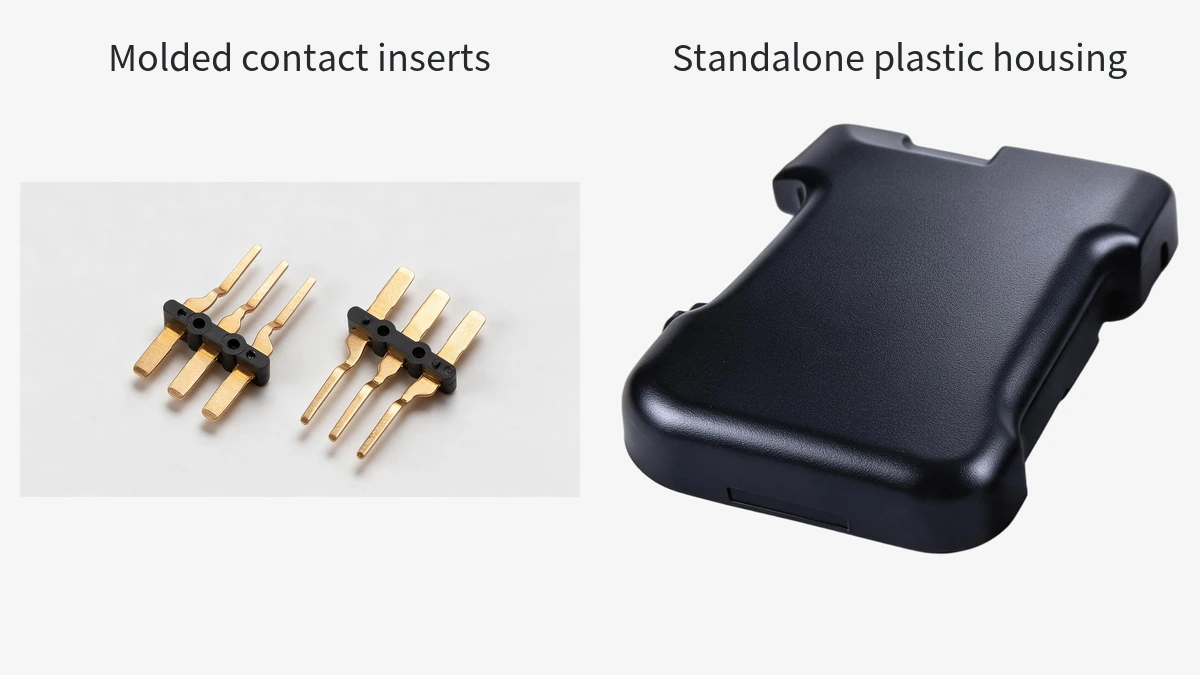
Are you making a plastic housing or a plug with metal pins molded into plastic? The machine you consider first may differ for these two products.
Drawing on the manufacturing process from product development and mold making to injection molding, Worldboundgroup explains how to look at a product’s components before molding and decide whether to start with a vertical or a conventional horizontal machine.
Understanding Vertical and Horizontal Injection Molding Machines
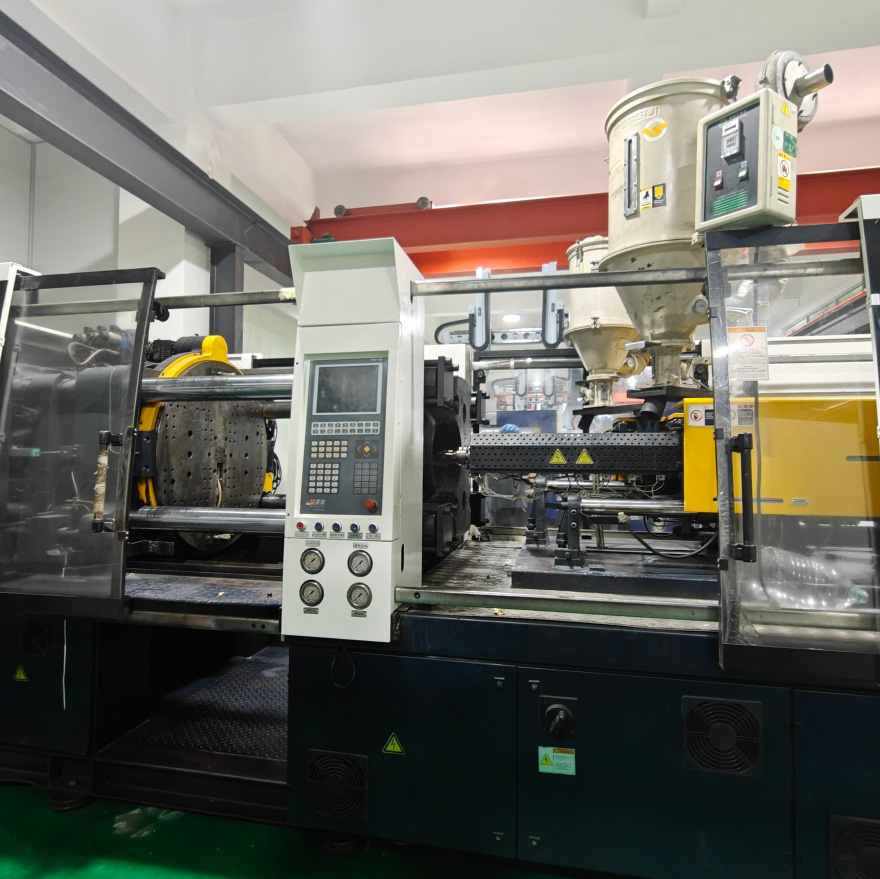
Here, a “conventional injection molding machine” means the horizontal injection molding machine commonly used in factories. Both types inject molten plastic into a mold and release the product once it has set. The easiest difference to recognize is how the mold opens and closes.
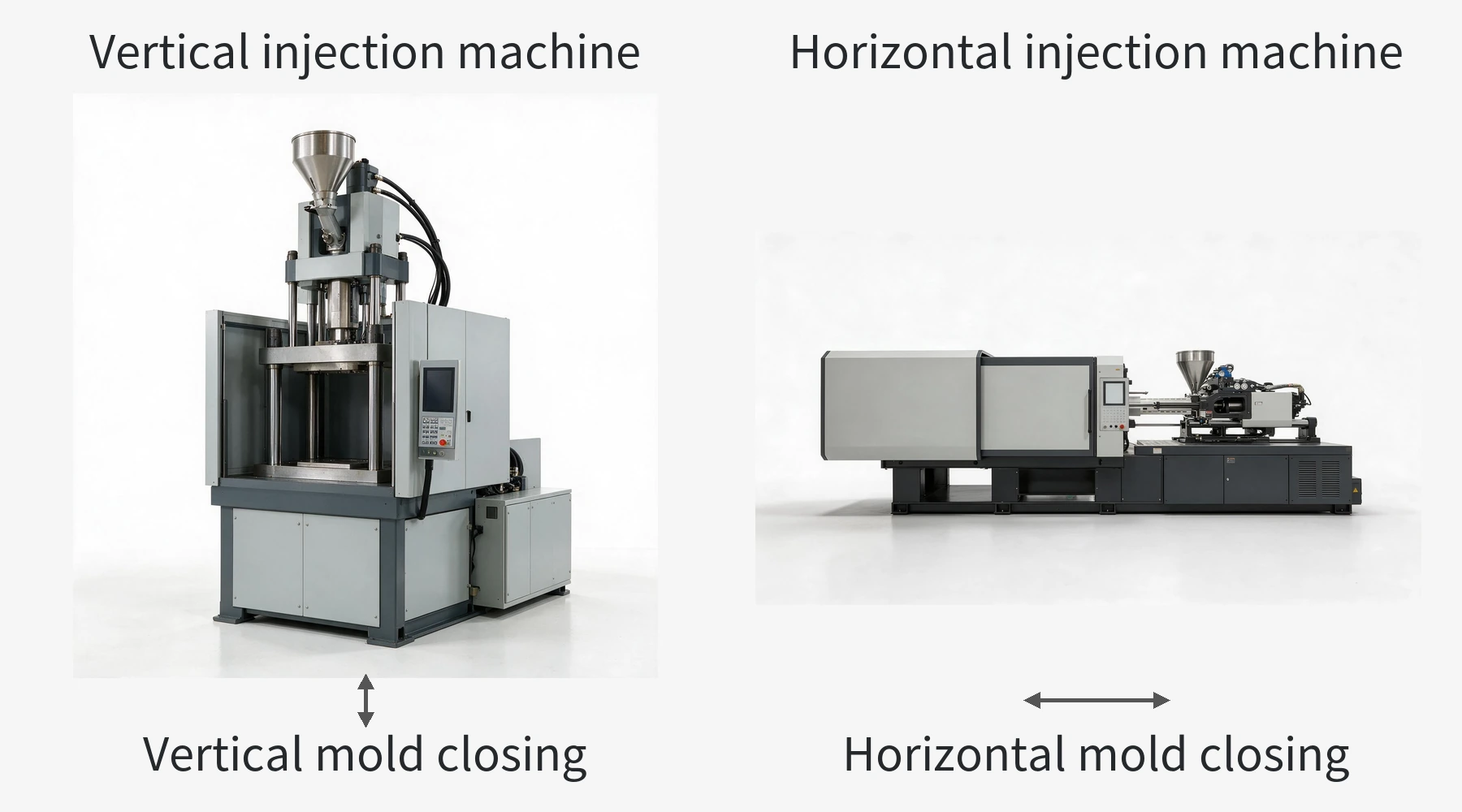
- Vertical: the mold opens and closes up and down. A preformed component can be placed in its locating position in the lower mold before the mold closes and plastic is molded around it.
- Horizontal: the mold opens and closes horizontally. The molded plastic part can be ejected to drop out or removed by a robot.
Identify the machine by its clamping unit. Some vertical machines have a horizontally arranged injection unit, but their mold still closes vertically.
What Products Are Commonly Made on Vertical Machines?
Common examples are products in which a metal part, cable, or other preformed component is present first, and plastic is then molded around part of it. The component placed in the mold first is called an “insert,” and the process is called “insert molding.”
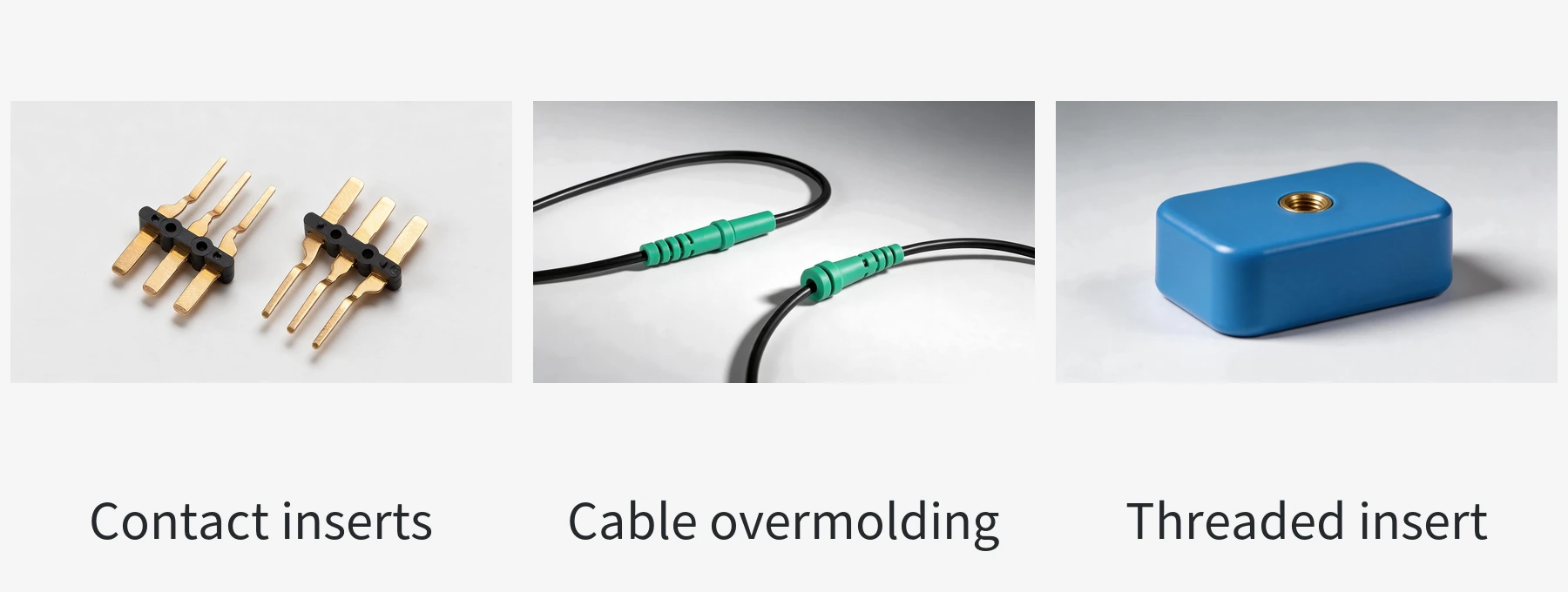
| Common products | What goes into the mold first? | Where is the plastic molded? |
|---|---|---|
| Plug inserts and insert-molded contacts | Metal plug pins or contacts | Around part of the contacts, forming the plastic section that holds and insulates them |
| Cable overmoldings and molded cable sleeves | Prepared cables | Around the cables, forming plastic sections such as sleeves |
| Plastic parts with threaded metal inserts | Internally threaded metal inserts, such as nuts | Around the inserts, leaving the threaded holes available for fastening |
Every molding cycle for these products involves loading, positioning, and unloading. In a common vertical layout, the insert sits in a locating position in the upward-facing lower mold. The lower mold supports it, and gravity helps it stay in place before the mold closes. Locating features in the mold must still secure the insert; gravity alone is not enough.
Vertical machines can also use rotary tables, sliding tables, and robots for continuous production. They are not limited to manual, small-batch work.
What Products Are Commonly Made on Horizontal Machines?
If this molding step produces standalone injection-molded parts, with no other components to load before each cycle, a horizontal machine is usually the first option to consider.
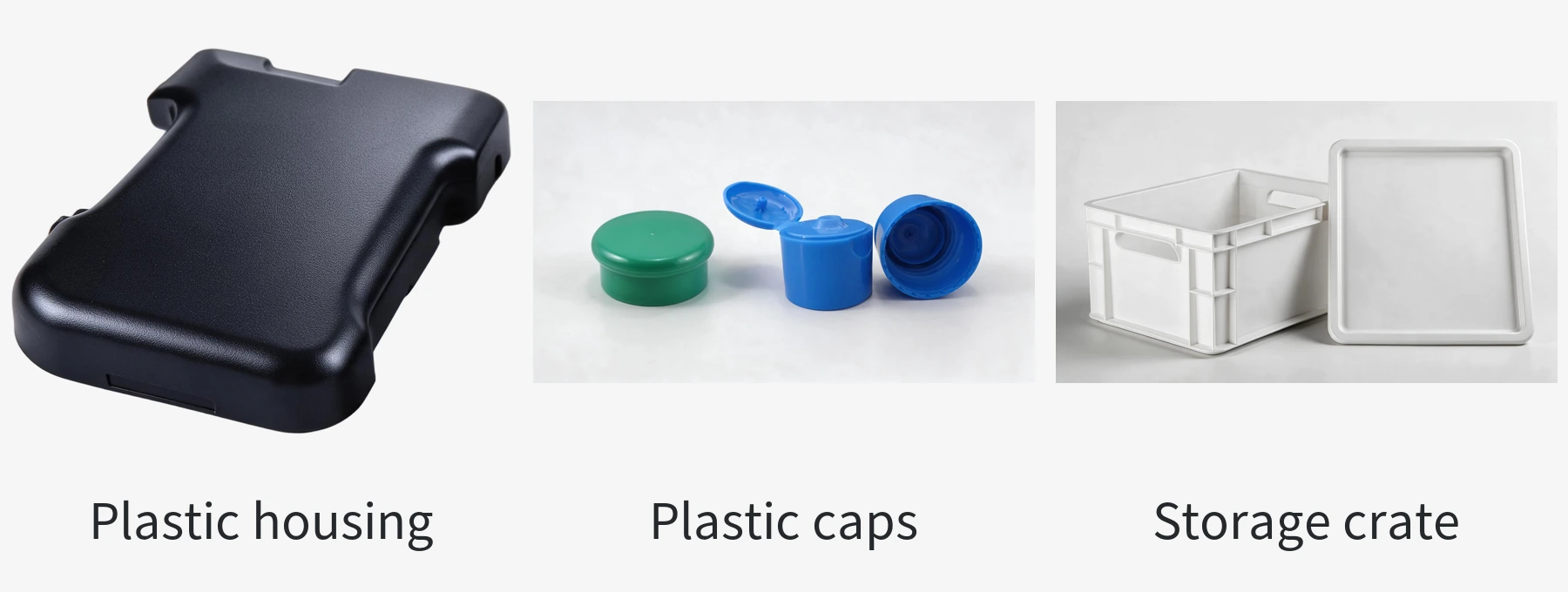
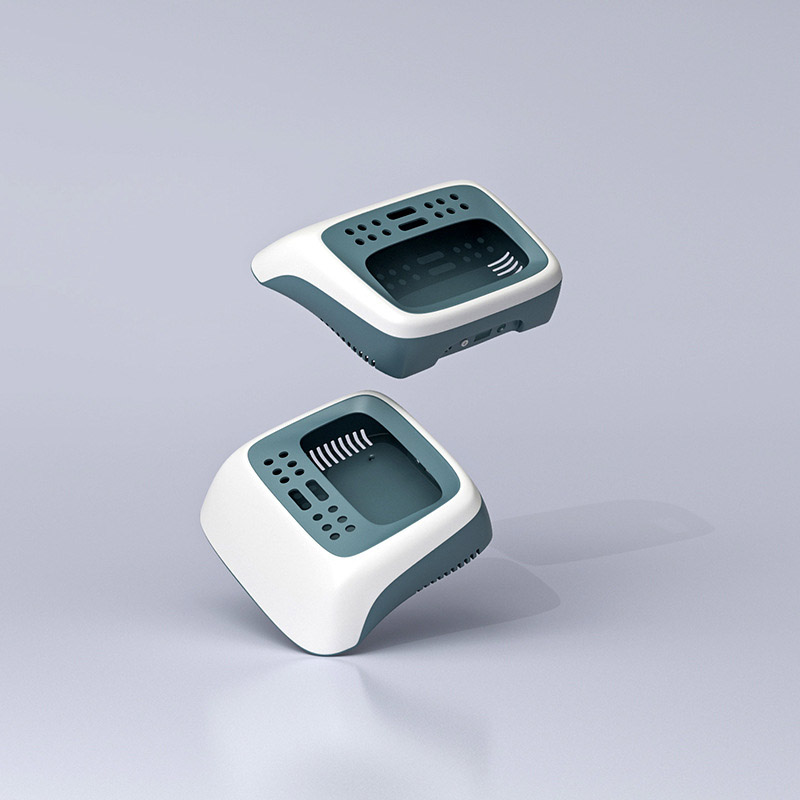
- Electronics and appliance housings: remote control cases, upper and lower equipment housings, and small appliance housings.
- Plastic caps: standalone parts such as screw caps and snap-on caps.
- Everyday plastic products: injection-molded products such as storage boxes and trays.
These products mainly require repeated molding and part removal. A horizontal layout makes it easier to integrate automatic ejection, robots, and conveying equipment.
The distinction concerns the plastic part itself. A circuit board inside an appliance or screws fitted to its housing do not mean those components were placed in the mold during injection molding.
Which Type Fits Your Product?
Ask yourself: Does the mold need any other components placed inside it before the plastic is injected?
| How your product is made | Consider first | Why |
|---|---|---|
| You make standalone plastic parts, such as housings or caps, without loading inserts before molding | Horizontal | The focus is continuous molding and automatic part removal |
| You load contacts, wire ends, or nuts in every cycle, then mold plastic around them | Vertical | The focus is making inserts easy to load, hold securely, and unload |
| You mold another layer of plastic over an existing rigid plastic part (overmolding) | Compare both types | Consider how the rigid part is held and transferred to the next molding position |
| You need to load inserts, and a fixture or robot can already position and hold them reliably | Compare both types | A horizontal machine may also work; compare the full loading, locating, and unloading arrangements |
Be clear about when the metal component is added: placing a nut in the mold and then molding plastic around it is insert molding. Fitting a nut or driving in a screw after the plastic housing has been made is not insert molding. In that case, you can still assess the housing as a standalone plastic part and consider a horizontal machine first.
“Consider first” does not mean “the only option.” A horizontal machine can also handle insert molding with suitable mold locating features and automation, and a vertical machine can make some housings. A product’s name, size, or production quantity alone cannot determine whether to use a vertical or horizontal machine.
Once you have identified which situation applies, check whether the specific machine can accommodate the mold, whether parts can be loaded and removed smoothly, and whether its shot capacity and clamping force are sufficient. These checks turn the initial choice between vertical and horizontal into a production setup suited to your product.